






Back to news

October 23, 2020 | International, Clean technologies, Big data and Artifical Intelligence, Advanced manufacturing 4.0, Autonomous systems (Drones / E-VTOL), Virtual design and testing, Additive manufacturing

HebdoSTIQ - 22 octobre 2020

HebdoSTIQ - 22 octobre 2020

VOLUME 21, No 40 22 octobre 2020


Actualités

Des occasions d'affaires en or pour les PME manufacturières québécoises!


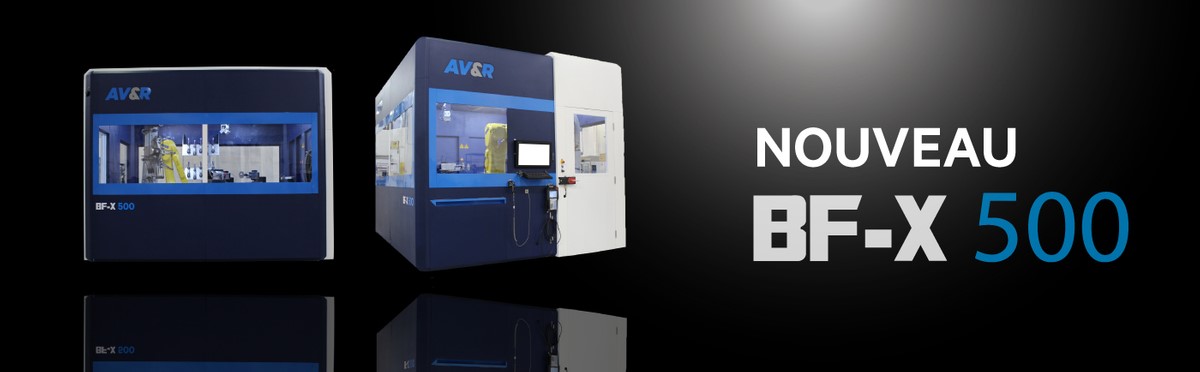
Lancement de la nouvelle plateforme de finition robotisée BF-X 500

Chef de file en automatisation industrielle depuis 25 ans, AV&R est une société d'ingénierie spécialisée en robotique qui compte 70 employés œuvrant à travers le monde


Le Groupe DCM acquiert la société Electro-Kut

Le Groupe DCM, une entreprise québécoise oeuvrant dans de multiples domaines de l'aéronautique, est fier d'annoncer l'acquisition récente de la société Electro-Kut


Précision ADM Québec investit dans une nouvelle usine à Gatineau

Précision ADM Québec investira plus de 2 millions de dollars dans sa nouvelle usine de Gatineau afin de créer le plus large inventaire d'écouvillons nasopharyngés au Canada pour le dépistage de la Covid-19


Bonne nouvelle, la relève est prête chez CDID!

Après 27 ans, le président fondateur, M. Régis Drouin, quittera l'aventure de CDID pour se consacrer à son nouveau projet : la retraite !


Salon connexion 100 % virtuel

Événements Les Affaires – Assistez à l'événement le plus important au Québec entièrement dédié à la transformation numérique les 10, 11, 12 novembre prochain en ligne!


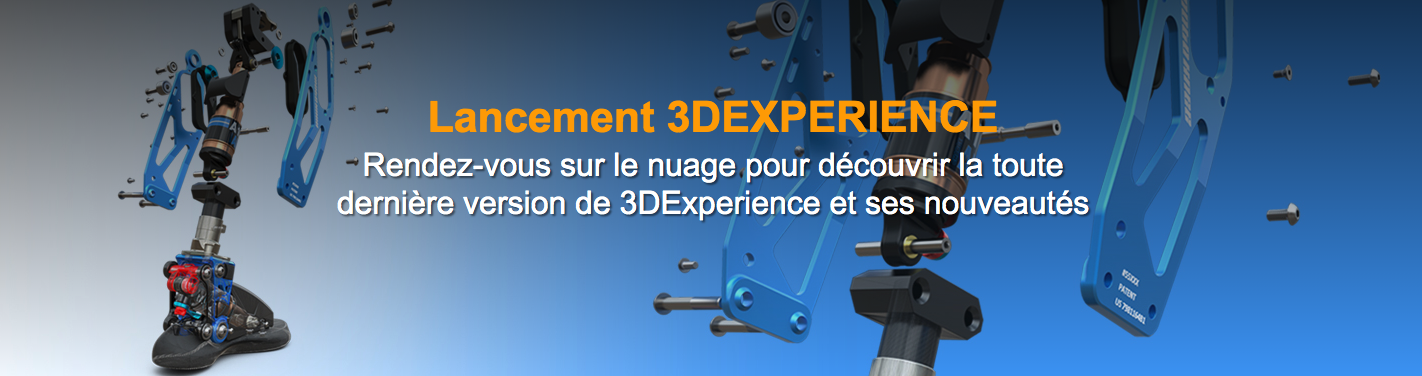
Lancement 3DExperience par PBI

Découvrez la toute dernière version de 3DExperience, le 28 octobre prochain à 10 h!


Les bonnes nouvelles de l'industrie

Bombardier, Technosub, Magna, Fisker Inc., Airmedic, Sparta Industriel,TransFab Métal, Robotec


Occasions d'affaires

Occasions d'affaires privées

2020SC043 – URGENT – recherche Tube aluminium carré 3″ x 3″, 1/8″ mur, rayon extérieur 3/16″

Une entreprise du Centre-du-Québec recherche:


Occasions d'affaires

Appels d'offres publics

2020NR366 – Structure d'acier pour escalier

Fermeture : 06-11-2020


2020NR365 – Fourniture d'un tour et d'une fraiseuse CNC

Machineries


2020NR364 – Remise en service d'un vérin de type Ford-Smith

Énergie (production et distribution)


2020NR363 – Usinage de pièces, pour train

Transport (fabrication de matériel de), sauf aérospatiale


2020NR362 – Métaux ouvrés architecturaux

Construction


2020NR361 – Système de levage scénique

Sport et loisirs (manufacturiers)


2020NR360 – Acquisition et installation d'ameublement de fourgonnette

Transport (fabrication de matériel de), sauf aérospatiale


2020NR359 – Fourniture et installation de panneau électrique, pour sous-station d'usine de filtration

Environnement


2020NR358 – Aménagement d'1 fourgonnette avec monte-charge et d'1 mini-fourgonnette

Transport (fabrication de matériel de), sauf aérospatiale


2020NR357 – Entretien préventif, correctif ou d'urgence d'appareils de levage

Énergie (production et distribution)


2020NR356 – Entretien correctif et préventif de vérins hydrauliques

Énergie (production et distribution)


On the same subject

  • Tech startups still face the Pentagon’s ‘valley of death’

    January 31, 2020

    Tech startups still face the Pentagon’s ‘valley of death’

    By: Joe Gould WASHINGTON ― Brooklyn-based technology startup goTenna launched in 2014 with a candy bar-sized gadget that pairs with smartphones to create off-grid, no-network communications. Though it was originally a commercial product, the company has received millions of dollars' worth of government business since 2015, mostly with the U.S. Department of Homeland Security but also with Special Operations Command, the Air Force, the Navy and the Army. About 150,000 devices have shipped. The Army has spent millions of dollars with goTenna, but the service cannot give the company one of the most important things for a small business ― the certainty of recurring revenue. “Now the funding is out, and even the program officer for that program doesn't know where we go next within the Army,” goTenna founder and CEO Daniela Perdomo said at a Defense News-hosted roundtable in December. “That's in part why we've been spending more time, frankly, on civilian public safety. Because even though DHS is consistently [under funding restrictions], they seem to be moving. They seem to move faster.” That sort of inconsistency and confusion is why tech startups dealing with the Pentagon, as well as investors, so dread the gap between their innovative product's development and the Pentagon's sluggish decisions to launch. That gap has a nickname: “the valley of death.” The Pentagon has experimented with a variety of means to buy emerging technologies, an important goal as it seeks to preserve its edge against Russia and China. But one truism ― affirmed in a recent report from the Ronald Reagan Institute ― is that the federal government has been unable to fully adapt its practices to promote and harness private sector innovation, despite making strides. Addressing the House Armed Services Committee on Jan. 15, former Under Secretary of Defense for Policy Michele Flournoy said the valley of death between a product's development and the moment that product becomes part of a program of record remains an obstacle. She said that's partly because acquisitions officials don't use the new authorities granted by Congress over recent years. The excitement of receiving development money from the Department of Defense stands in stark contrast to what often follows. “[Startups] win the prototype competition: ‘Great, we love you.' And that's in, like, FY19,” Flournoy said. “And then they are told, ‘OK, we are going to have [a request for proposals] for you in '21,' and [the startups] are like: ‘OK, but what do I do in '20? I have got a 10-year hole in my business plan, and my investors are pressuring me to drop the work on DoD because it's too slow, it's too small dollars.'” How would Flournoy fix it? She advised the Pentagon to hire tech talent ― “smart buyers and developers and fielders of new technologies” ― and create a bridge fund for firms in competitive areas like artificial intelligence, cybersecurity and quantum computing. (The idea seemed to resonate with Texas Rep. Mac Thornberry, who is the panel's top Republican and the author of multiple acquisitions reform laws passed in recent years.) At the Defense News roundtable, leaders from the tech community said not only has it been difficult for small businesses to enter an aerospace and defense market dominated by five major firms, but it's hard for startups to justify to investors that the government should be retained as a client when it is often the least decisive. “I think the fundamental misunderstanding between the DoD and venture investors is just how difficult it is to keep the wheels on a fast-growing startup,” said Katherine Boyle of venture capital firm General Catalyst. But the Pentagon is working to bridge the gap between prototype and production. Over the last year, the Defense Innovation Unit ― the department's outpost in Austin, Texas; Boston, Massachusetts; and California's Silicon Valley ― has launched two internal teams, for defense and commercial engagement, to envision these transitions and match them to the Pentagon's five-year budgeting process, according to DIU's director of strategic engagement, Mike Madsen. These teams are tasked with learning the needs of the services, working with commercial industry to develop prototypes to meet those needs and then helping market the prototypes more broadly within the Defense Department. Along these lines, DIU helped a company that developed a predictive maintenance application for the Air Force ― Redwood City, California-based C3.ai ― win a predictive maintenance contract for Army ground vehicles. C3.ai has since created a federal arm unit. A quarter of all prototypes awarded by DIU transitioned to programs of record, and another 50 percent are eligible for the transition. “It will take time for us to develop the right cultural instincts, but it's already happening,” said DIU's director of commercial engagement, Tom Foldesi. Anduril Industries co-founder and Founders Fund partner Trae Stephens has often criticized the DoD's approach to Silicon Valley. But speaking at the Defense News panel, he acknowledged progress through DIU's ability to harness the flexible other transaction authority, a congressionally mandated contracting mechanism that makes it easier to prototype capabilities. He also praised the Air Force's effort to rework Small Business Innovation Research funds to target more mature technologies. “I don't know who's responsible for banging the table about it over and over, but somebody is out there saying it," Stephens said. “It seems to be coming across in the messaging in some way.” https://www.defensenews.com/2020/01/30/tech-startups-still-face-the-pentagons-valley-of-death/

  • Better Control Over 3D Printing

    January 21, 2020

    Better Control Over 3D Printing

    What's going on in that printing machine? For surgical repairs to a patient's hip or skull, surgeons might use a titanium bone implant. However, metal objects such as these – with complex outer forms, or with intricate internal features such as ducts or channels – can be difficult to make using conventional processes. To create these useful devices, manufacturers are turning to 3D printing, a process that typically involves building a part layer by layer, sometimes over minutes or hours. 3D printing of metal objects is a booming industry, with the market for products and services worth more than an estimated $2.3 billion in 2015 – a nearly five-fold growth since 2010. It's increasingly popular in the medical, aerospace, and automotive industries, where it can be used to make complex components such as fuel injector nozzles for engines. But the commercial technology is still relatively new, and maintaining quality control can be challenging and time-consuming. Two supposedly identical products made in the same way on the same machine don't necessarily come out with the same dimensions. Tiny imperfections can appear in the layers, reducing the strength properties of the components. And residual stresses can build up as the layers cool, creating cracks between layers and warping the parts. The stress can be so high, in fact, that it can warp a 1-inch thick piece of steel by a millimeter. To give manufacturers more control over this process, NIST researchers have built a metal 3D printing testbed, a custom-made printer that they can use to produce tools that will allow users to monitor the process in real time. The researchers hope to answer some fundamental questions, such as: How hot does the melting metal get in each layer? How do you lower the stresses that cause cracking and warping? And what sensors would you need in order to provide better information about what's happening inside the printing machine? Eventually, the researchers hope their system will be useful beyond 3D printing of metal objects, to look at solid materials that experience extreme heat, such as the wingtips of supersonic aircraft. https://www.nist.gov/pml/about-pml/pml-working-you/better-control-over-3d-printing

  • B612, the Urban Air Mobility Plazza Accelerator

    September 9, 2022

    B612, the Urban Air Mobility Plazza Accelerator

    As part of Toulouse Metropole's flagship accelerator and incubator centre, B612, the Urban Air Mobility Plazza Accelerator multi-year programme will assist a minimum of 10 start-ups developing urban air mobility solutions from across Europe focusing on environmentally sustainable logistics and [...]

All news